Visualizzazione post con etichetta piatto completo. Mostra tutti i post

sabato 16 febbraio 2013

Insalata di pasta, dopo il trip Australiano / Pasta salad, after my Australian Trip

English version here.

La foto
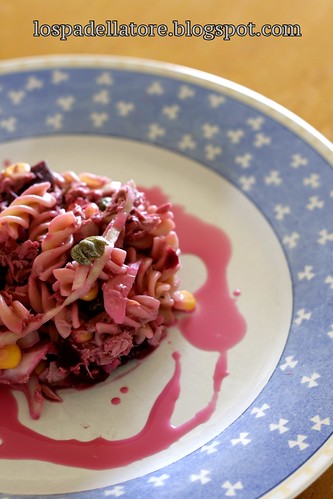
Pasta, tuna, cabbage, beetroot, corn, capers, coconut cream

Dati EXIF qui.

La storiella

Il mese scorso (gennaio 2013) sono andato a farmi un giretto con i miei vecchi in alcune città Australiane. Quelle che mi mancavano da visitare. Ah no, mi manca ancora la Tasmania... :)

Devo dire che la routine da turista non è così male: sveglia, corsetta, spesa di prodotti freschi al mercato locale, giretto a visitare le bellezze artistiche della città, un po' di foto, cucinare una bella cena da condividere magari con gli amici del posto...

Posso dire che sono tutte cittadine in cui potrei tranquillamente vivere. Dalla peggiore alla migliore:

  • Canberra. Costruita 100 anni fa per diventare la capitale del paese, ospita principalmente persone che lavorano negli uffici governativi... Ci sono diversi musei (gratuiti) e luoghi storici da visitare. Ma per il resto, troppo tranquilla per i miei gusti... forse neanche da pensionato in casa di riposo. :)
  • Sydney. Troppa gente, troppo traffico, troppo business! Ci sono sbarcato 3 anni fa e ritornarci dopo aver visitato tutte le altre città australiane posso confermarlo. Non si respira, ho bisogno di spazi aperti, io.
  • Adelaide. Come Perth (dove vivo), ma più piccola e tranquilla. E ho detto tutto. Quindi alle 5 di pomeriggio tutti i negozi chiusi e tutti a casa in giardino a bersi una birra fresca in rilassatezza. :) Ma ci sono bei posti in cui correre ed il miglior mercato di prodotti freschi in cui sia mai stato. E siamo stati pure stati al Celsius, il miglior ristorante della città, l'11esimo d'Australia secondo questa guida! Racconterò...
  • Melbourne. Adoro questo posto. Ok, ci sono stato in estate (d'inverno piove troppo mi han detto), c'erano gli Australian Open e mi sono divertito con gli amici che vivevano li... ma questa città guadagna punti per:
  • The Tan, un circuito podistico in ghiaino. Finalmente dopo 3 anni di asfalto, gambe e articolazioni hanno ripreso a sorridere. :);
  • un numero di ottimi ristoranti che, a parte Sydney, si sognano in qualsiasi altro posto;
  • la personale percezione di clima "rilassato e rustico" anzichè "modern business" di Sydney.

Comunque, ora sono tornato alla mia piacevole routine quotidiana a Perth. Ho come la percezione che questa città sia più pulita e ordinata rispetto alle altre e la gente sia un po' più sorridente!

Ed ora prendiam nota del pranzo che mi porto al lavoro sta settimana:

La ricetta

Ingredienti Mise en place per 6 porzioni da 200 g

  • Pasta (fusilli): 200 g
  • Cavolo capuccio, tagliato a listarelle: 180 g
  • Mais in scatola: 120 g
  • Barbabietole cotte: 180 g
  • Tonno al naturale: 300 g
  • Crema (o latte?) di cocco: 230 g
  • Sale, pepe

Preparazione

  1. Portare ad ebollizione 2 l di acqua, salare con 20 g di sale, cuocere la pasta al dente
  2. Cuocere il cavolo al microonde per 6 minuti
  3. In un contenitore capiente, mescolare tutti gli ingredienti a parte il latte di cocco, regolare di sale e pepe
  4. Scolare la pasta, mescolarla al condimento insieme al latte di cocco
  5. Dividere in 6 porzioni
  6. Conservare in frigo. Da consumarsi preferibilmente entro 5 giorni. :D

Dati nutrizionali

Calorie 100 g128 kcal
Carboidrati48%
Proteine27%
Grassi25%

L'angolo della cultura


The photo

Pasta, tuna, cabbage, beetroot, corn, capers, coconut cream

EXIF data here.

The little history

Last January I enjoy a trip with my parents in some Australian cities. Now I only miss Tasmania!

I should say that the tourist's daily routine is not so bad: wake up, go for a run, shopping fresh products at the local markets, visit the city, take photos, cooking a nice dinner to share with friends...

These cities are all potential places in which I can live. IMHO in reverse order, the best are:

  • Canberra. Built 100 years ago for being the capital of the country. Most of the people that lives there work in some government office... There are a lot of nice free museums and places to visit. But for the rest, it's too quite for me... maybe when I will retire. :)
  • Sydney. Too many people, too much traffic, too much business! I landed here 3 years ago and coming back after had visited all the major Australian's cities I can confirm that. I need to breath, space!
  • Adelaide. It's like Perth but smaller and more quite. So I said all. At 5pm all shops are closed and people are at home in the garden chill out with a beer. But there are nice places for running. And there is the best fresh market I haven't been. We bought fish heads! And we had dinner at Celsius, the best restaurant of the city, the 11th in Australia for the agfg guide!
  • Melbourne. Love this place. Ok, it was summer, there were the Australian Open and I had fun with my friends... but this city gains point because of:
  • The Tan, one of the best running track I have ever been;
  • the number of good restaurant is incomparable (with Sydney) from the rest of Australia;
  • the mood is more "rustic relaxed" rather than "modern business" as Sydney.

Anyway, now I came back to my working routine and I restart to prepare my healthy weekly meals as this pasta!

The recipe

Ingredients Mise en place

  • Pasta (spirals): 200 g
  • Cabbage, sliced: 180 g
  • Canned corn: 120 g
  • Canned beetroot: 180 g
  • Canned tuna (in springwater): 300 g
  • Coconut cream: 230 g
  • Sale, pepe

Method

  1. Bring 2 liters of water to a boil, add 20 g of salt, cook pasta (keep it undercook because it will soft once mixed with other ingredients)
  2. Cook cabbage in the microwave for 6 minutes
  3. In a big bowl, mix all the ingredients but coconut cream, salt pepper at your taste
  4. Drain the pasta and mix with the coconut cream with the rest of the ingredients
  5. Divide in 6 portions
  6. Keep refrigerated. Best before 5 days. :D

Nutritional facts

Calories per 100 g128 kcal
Carbohydrates48%
Proteins27%
Fat25%

Total cost $2.96

The culture corner

In 2003 there was a bushfire that destroyed 66% of ACT territory.

mercoledì 21 novembre 2012

Ostriche, gnocchi, spinaci, pomodoro / Oysters, gnocchi, spinach, tomato

English version here.

La foto

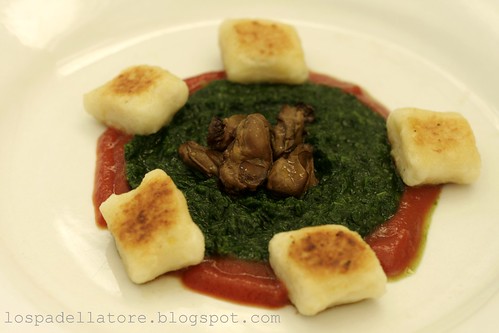
Smoked oysters, potato lemon gnocchi, spinach, tomato

Dati EXIF qui.

La storiella

Devo dire che è da un po' che non scrivo nel blog. Mi sono impigrito a fare foto di food, specialmente quando in casa non si ha una buona fonte di luce naturale. Scuse. C'è sempre un modo per creare un set per fotografare un piatto. Basta dedicarci un po' di tempo e farlo!

D'altra parte sto cucinando un sacco (come sempre). Domenica scorsa ho organizzato un bel pranzo con gli amici con il seguente invito: portatevi da bere e la bistecca, io ve la cucina "come si deve"; contorni e dolci forniti dalla casa. La ciurma sembra avere apprezzato. :)

Poi mi diverto a stare in cucina perché, come dice Thomas Keller, l'importante è ripetere gli stessi gesti in continuazione fino a raggiungere un ottimo livello di confidenza. In base alla teoria delle 10000 ore una persona dovrebbe diventare esperta in un certo campo dopo appunto 10000 ore di pratica. Quindi, se cucino 1 ora al giorno dovrei diventare esperto tra più di 27 anni! (Ok, in realtà posso dire che cucino più di 1 ora al giorno di media :D)

Oggi però c'è una bella luce e ho fatto la foto al piatto. :)

La ricetta proviene da una proposta di un mio amico che ha trovato una combinazione di ingredienti dalla Flavour bible. Mi ha sfidato a creare un piatto usando: ostriche, spinaci, patate, scalogno, panna, pomodori, olio, limone, pepe, burro, aceto, prezzemolo, aglio.

Risultato finale non eccelso visto che le ostriche non erano di qualità eccelsa... affumicate in scatola! Mai più!
Comunque la combinazione dovrebbe funzionare: grasso dalle ostriche, corpo dagli gnocchi e salsa di spinaci, acidità dal pomodoro.

Smoked oysters, potato lemon gnocchi, spinach, tomato

Dati EXIF qui.

La ricetta

Ingredienti Mise en place (piatto completo)

  • Spinaci congelati: 100 g
  • Ostriche affumicate: 100 g
  • Passata di pomodoro: 100 g
  • Gnocchi di patate: 200 g

Preparazione

  1. Cuocere gli spinaci al microonde per 3-4 minuti, salare, frullare (aggiungere un po' di acqua se necessario)
  2. Scaldare una padella antiaderente a fuoco medio
  3. Cuocere gli gnocchi in acqua salata in ebollizione, scolare quando vengono a galla
  4. Saltare gli gnocchi in padella con un filo d'olio fino a quando si forma una crosticina
  5. Per impiattare: disporre la salsa di spinaci a specchio, la salsa di pomodoro sul bordo, le ostriche al centro, gli gnocchi sul bordo
  6. done.

Dati nutrizionali

Calorie634 kcal
Carboidrati45%
Proteine17%
Grassi38%

L'angolo della cultura

Se le ostriche fresche hanno il guscio aperto significa che sono morte e non si dovrebbero mangiare. Scritto qui.

Share


The photo

Smoked oysters, potato lemon gnocchi, spinach, tomato

EXIF data here.

The little history

It's a little bit I haven't written here. It's because I was lazy at taking food photos. Especially when you don't have a good light source in your house. Anyway, they are excuses. There is always a way to set up an environment for taking a photos. You only have to dedicate time and just do it!

On the other hand, I spent a lot of time cooking. Last Sunday I organized a nice lunch with the following formula: BYO drinks and steak, I cook it properly; sides and dessert provided. All my 13 guests were happy. (I hope!).

Then I enjoy my time in the kitchen because, as Thomas Keller says, the important on cooking is repeat the same actions over and over until you become confident in what you do. Based on the theory of 10000 hours a person suppose to become an expert in a particular field after 10k hours of practice. So, if I cook 1 hour per day it will take me more than 27 years before I can consider myself a cook expert! (Ok, I can say I cook more than 1 hour a day in average :D).

But today there were a good light and I took the photo of today's recipe. :)

It comes from a proposal of my friend. He found a combination on the book Flavour bible and he challenged me to create a dish with the following ingredients: oysters, spinach, potatoes, shallots, cream, tomatoes, oil, lemon, pepper, butter, vinegar, parsley, garlic.

My final result was not outstanding cause of the non high quality oysters. I used the smoked oysters in the can! Never again! :)

Anyway, the combination should work: fat from oysters, texture from gnocchi and spinach, acidity from tomato.

Smoked oysters, potato lemon gnocchi, spinach, tomato

EXIF data here.

The recipe

Ingredients Mise en place (for a complete main)

  • Frozen spinach: 100 g
  • Smoked oysters: 100 g
  • Tomato sauce: 100 g
  • Potato gnocchi: 200 g

Method

  1. Cook spinach in the microwave for 3-4 minutes, season with salt, blend (add some water if necessary)
  2. Warm a fry pan at medium heat
  3. Cook gnocchi in salty boiled water, drain when they come to surface
  4. Sautee gnocchi in the pan with a little bit of oil until golden
  5. Plating: spread spinach sauce in the center, tomato sauce on the board, oysters in the center, gnocchi on the board
  6. done.

Nutritional facts

Calories 100 g635 kcal
Carbohydrates45%
Proteins17%
Fat38%

The culture corner

If fresh oysters have open shell it means that they are dead. They shouldn't be eaten. Is written here.

Share

sabato 25 febbraio 2012

Riso, carne, verdure / Rice, meat, veggies

English version here.

La foto

Riso, carne, verdure / Rice, beef, veggies

Dati EXIF: f/2.8, esposizione 1/30 secondi, ISO 100, distanza focale 50 mm

La storiella

Questo è un tipico pasto che mangio giornalmente. La sera mi cucino un piatto completo bilanciato: minimo 45% carboidrati, 15% proteine, 25% grassi. Poi mi pappo un dessert. :D

Ho una dieta da circa 2000 kcal al giorno. Corro circa 70 km a settimana. Godo un sacco nel cucinare, mangiare ed essere in forma!

Mi piacerebbe che gli altri lo facessero. È parecchio frustrante leggere: "Che buono, ma non lo posso mangiare, sono a dieta...". E poi si mangiano la pasta in bianco con il burro che è una bomba calorica che non sazia per niente. Il problema è la mancanza di educazione alimentare a partire dalle scuole. Devo dire che sono abbastanza impressionato (per non dire scandalizzato) della mancanza di cultura alimentare nella popolazione. Tutti esperti gastronomi, ma quasi tutti completamente ignoranti per quanto riguarda cosa e quanto bisognerebbe mangiare per mantenersi in salute. Solo le generiche indicazioni "mangiare frutta e verdura 5 volte al giorno" o roba del genere... ma che vuol dire se non si specifica la quantità?!

Questo è il problema. Come in molti altri aspetti della vita, le persone sono pigre, non vogliono imparare e usare i numeri. Se si vuole bene al proprio corpo e si vuole mantenerlo in forma è necessario sapere come funziona, quindi studiare cosa e quanto mangiare. Stimare le calorie giornaliere di cui si ha bisogno per mantenere un IMC<22, (o massa grassa<12%) il quale garantisce un buono stato di salute ed assumere un quantitativo di cibo che mantenga tale stato.

Spero con questi post di riuscire a contribuire ad alimentare la cultura alimentare... Perchè mangiare restando in salute ` uno dei piaceri della vita! ;)

La ricetta

Un piatto completo, carboidrati da riso (o pasta, polenta, gnocchi ecc) e verdura (poche calorie, ottima per i nutrienti e saziante), proteine da carne/pesce, grassi da carne/pesce e l'olio per il soffritto. Se mancano grassi aggiungo formaggio.

Ingredienti

  • Riso: W g (100 g)
  • Carne bovina macinata cotta(*): W*1.5 g (150 g)
  • Cavolo cappuccio: W*3.5 g (350 g)
  • Cipolla: W*0.95 g (95 g)
  • Carote: W*0.85 g (85 g)
  • Olio EVO: W*0.06g (6 g)
  • Sgombro (in scatola): W*0.4 g (40 g)

Preparazione

  1. Cuocere il riso (bollito o per assorbimento)
  2. Tritare la cipolla
  3. Tagliare il cavolo e le carote
  4. In una padella, scaldare l'olio (ho aggiunto un po' d'acqua), cuocere la cipolla fino a quando diventa morbida
  5. Cuocere cavolo e carote al microonde per circa 4 minuti
  6. Saltare le verdure in padella
  7. Regolare di sale e pepe (io anche salsa di soia)
  8. Cuocere per un altro paio di minuti
  9. Aggiungere il macinato e lo sgombro
  10. Una volta cotto, aggiungere il riso e spadellare per un paio di minuti
  11. Magnare!

Dati nutrizionali

Calorie totali1000 kcal
Peso finale900 g
Calorie per 100 g111 kcal
Carboidrati45%
Proteine24%
Grassi32%

L'angolo della cultura

Riferimenti:

Share


The photo

Riso, carne, verdure / Rice, beef, veggies

Dati EXIF: f/2.8, exposure 1/30 seconds, ISO 100, focal length 50 mm

The little history

This is a tipical dish that I ate daily. In the evening I usually cooked a complete dish with a balanced amount of nutrients: minimum 45% carbohydrates, 15% proteins, 25% fats. Then I ate a dessert. I have a diet of about 2000 kcal per day. I run 70 km a week. I love enjoy food and be healty.

I'd like all the people do the same. It's annoying reading about people always saying: "oh, I can't eat sweets, I'm in diet..." Then they ate pasta with oil... a caloric bomb that unsatisfied the palate... The problem is there is no nutritional education at school. I'm very (negatively) impressed that there is NO nutrition education at school. All experts in gastronomy but not in nutrition. Completely ignorance about what and the amount of food that you should eat to be in good healt. Only "eat veggies and fruits 5 times a day" or something like that... what does it means if you don't specify the quantity!?

This is the problem. As in other aspects of life, people are lazy to learn and use numbers. In order to be healty you have to study what and how much to eat. Estimate calories you need every day in order to have a BMI<22 that guarantee a good healt and eat the amount of calories that keep you in shape.

I hope with my little blog to contribute to fill this gap... ;)

The recipe

A basic complete dish, carbohydrates from the starch component (rice, pasta etc.) and vegetables (low in calories but good in nutrients and in fill up the stomach :)), proteins from meat or fish, fat from the meat/fish and the oil for frying vegetables. If fat is needed I add cheese.

Ingredients

  • Rice: W g (100 g)
  • Beef mince cooked(*): W*1.5 g (150 g)
  • Cabbage: W*3.5 g (350 g)
  • Onion: W*0.95 g (95 g)
  • Carrots: W*0.85 g (85 g)
  • Extra virgin olive oil: W*0.06g (6 g)
  • Mackerel (canned): W*0.4 g (40 g)

Method

  1. Cook rice by boiling or steaming
  2. Mince onion
  3. Cut carrots and cabbage
  4. In a fry pan, heat the oil (I added a little bit of water) add onion, cook until soft at medium heat
  5. Cook carrots and cabbage in the microwave for about 4 minutes
  6. Add veggies in the fry pan
  7. Season with salt and pepper (I added a spoon of soy sauce)
  8. Cook for a couple of minutes
  9. Stir in beef mince and mackerel
  10. Once cooked, stir in rice
  11. Enjoy!

*: warm a fry pan to medium-high heat, brown mince beef, season with salt, pepper, spices at taste (I used cumin)

Nutrizional facts

Total calories1000 kcal
Final weight900 g
Calories 100 g111 kcal
Carbohydrates45%
Proteins24%
Fat32%

The culture corner

References:

Share


domenica 19 febbraio 2012

Pasta al ragù su salsa al cavolfiore e zafferano / Pasta with ragù on cauliflower and saffron sauce

English version here.

La foto

Pasta with ragu on cauliflower saffron sauce / Pasta al ragu su crema di cavolfiore allo zafferano

Dati EXIF: f/2.8, esposizione 1/60 secondi, ISO 100, distanza focale 50 mm

La storiella

Dopo il fallimento di ieri dovevo riprendermi cucinando qualcosa di decente. Così mi sono inventato un piatto completo per il contest di Chiara.

Contest Oro e Zafferano

Ho usato gli ingredienti comprati stamattina al mercato, devo dire che la salsa al cavolfiore non è malaccio... ;)

Ho pure fatto per la prima volta la pasta choux (quella dei bignè tanto per capirsi...). Non ho ciccato, ma sono millemilavolte più facili dei macarons! Tiè! :)

Choux pastry

Choux pastry

La ricetta

Un piatto completo con ripartizione di nutrienti bilanciata (45% carboidrati, 15% proteine, 25% grassi).

Ingredienti

  • Pasta (ho usato le penne): W g (75 g)
  • Carne macinata di bovino cucinata (*): W*1.33 g (100 g)
  • Pomodori: W*3.06 g (280 g)
  • Olio EVO: W*0.08 g (6 g)
  • Cipolla: W*0.66 g (50 g)
  • Cavolfiore: W*2.4 g (180 g)
  • Zafferano: W*0.026 g (2 g)
  • Sale, pepe, erbe a piacere (ho usato il timo)

Preparazione

  1. Portare ad ebollizione 1 l di acqua con 10 g di sale, cuocere la pasta
  2. Tritare la cipolla
  3. Tagliare il cavolfiore in pezzi della stessa grandezza, cuocere al microonde per circa 4 minuti fino a quando diventa morbido
  4. In un pentolino, scaldare l'olio e soffriggere la cipolla
  5. Preparare il pomodoro in concassé
  6. Aggiunge il cavolfiore al soffritto di ciplla, aggiungere un po' d'acqua, cuocere per circa 5 minuti
  7. In un'altro pentolino riscaldare la parte liquida del pomodoro scartata dal concassè (meglio se ci fate un altro soffritto, io non c'avevo pensato prima... ;))
  8. Regolare di sale e pepe
  9. Cuocere il pomodoro per un paio di minuti
  10. Aggiungere lo zafferano al cavolfiore e ridurre a purea
  11. Ridure a purea il pomodoro, passarlo al colino per eliminare i semi
  12. Riscaldare il pomodoro e aggiungerci la carne
  13. Scolare la pasta al dente nel ragù, spadellare un paio di minuti
  14. Impiattare "a specchio" la salsa al cavolfiore (ossia distribuirla sul fondo del piatto ;))
  15. Impiattare la pasta al centro del piatto
  16. Decorare con il concassè di pomodoro e le erbe tritate
  17. Tu manciaaaaa!!!

Dati nutrizionali

Calorie totali690 kcal
Peso finale770 g
Calorie per 100 g90 kcal
Carboidrati46%
Proteine22%
Grassi32%

L'angolo della cultura

Riferimenti:

Share


The photo

Pasta with ragu on cauliflower saffron sauce / Pasta al ragu su crema di cavolfiore allo zafferano

Dati EXIF: f/2.8, exposure 1/60 seconds, ISO 100, focal length 50 mm

The little history

After the failure of yesterday I had to recover by cooking something decent. So I cooked a complete dish for Chiara's contest

Contest Oro e Zafferano

I wanted to cook a complete dish for dinner, so I used the ingredients I bought this morning at the market. I have to say that it's not bad the cauliflower sauce...

I also made for the first time choux pastry. This time I had success, but they're much easier than macarons! :)

Choux pastry

Choux pastry

The recipe

A complete dish with balanced amount of nutrients.

Ingredients

  • Pasta (I used penne): W g (75 g)
  • Beef mince cooked(*): W*1.33 g (100 g)
  • Tomatoes: W*3.06 g (280 g)
  • Extra virgin olive oil: W*0.08 g (6 g)
  • Onion: W*0.66 g (50 g)
  • Cauliflower: W*2.4 g (180 g)
  • Saffron: W*0.026 g (2 g)
  • Salt, pepper, herbs at taste (I used thyme)

Method

  1. Bring 1 l of water to the boil with 10 g of salt and cook pasta
  2. Mince onion
  3. Cut cauliflower in regular pieces, cooked in the microwave for about 4 minutes until soft
  4. In a pot, heat the oil (I added a little bit of water) add onion, cook until soft at medium heat
  5. Prepare tomato concassé(**)
  6. Add cauliflower in in the pot with onion, add a little bit of water, add salt and pepper, cook for about 5 minutes until soft
  7. In another pot, warm liquid part of tomatoes and half of the concassé
  8. Add salt and pepper
  9. Cook tomato for a couple of minutes
  10. Add saffron to cauliflower and puree
  11. Puree tomato sauce and sift with a colander in order to remove seeds
  12. Return tomato sauce to the pot and add beef mince
  13. Once cooked, sautè pasta on tomato sauce
  14. Place cauliflower sauce on the plate
  15. Plate pasta on the center
  16. Decorate with remaining tomato concassè and herbs
  17. Enjoy!

*: warm a fry pan to medium-high heat, brown mince beef, season with salt, pepper, spices at taste (I used cumin)

**: bring a pot of water to a boil; cut a cross on the bottom of the tomato; place tomato in boiling water for about 30 seconds; put tomatoes in cold water; remove skin from tomatoes; cut tomatoes in quarters; remove the internal liquid part and seeds; cut solid external part in cubes;

Nutrizional facts

Total calories690 kcal
Final weight770 g
Calories 100 g90 kcal
Carbohydrates46%
Proteins22%
Fat32%

The culture corner

References:

Share


lunedì 25 luglio 2011

Fegato sgombrato / Liver and mackerel

English version here.

La foto

Riso, fegato, sgombro, broccoli e carote / Rice, liver, mackerel, broccoli and carrots

Dati EXIF: f/4.0, esposizione 1/499 secondi, ISO 200, distanza focale 50 mm

La storiella

Carne e pesce nello stesso piatto? Combinazione blasfema! O forse no? Mmm, ma il vitello tonnato allora?!
Tradizionalisti, oggi ricetta che combina carne e pesce: fegato sgobrato.
E mi piace pure, perché ne ho preparato 8 porzioni che attualmente risiedono in frigo nelle vaschette mono-pasto: pranzo e cena per la settimana!

La ricetta

Per 8 porzioni

Ingredienti

  • Broccoli: 640 g
  • Carote: 540 g
  • Cipolla: 150 g
  • Fegato (bovino): 540 g
  • Sgombro in scatola: 165 g (peso netto di una confezione)
  • Sale, pepe, spezie a piacere
  • Riso Basmati: 540 g

Preparazione

  1. Tagliare broccoli, carote e fegato in pezzi della stessa grandezza (1 cm per me)
  2. Tritare la cipolla
  3. Cuocere broccoli e carote: io ho cotto i broccoli al vapore per 20 minuti, le carote 8 minuti al microonde
  4. In una padella ammorbidire a fuoco medio la cipolla usando l'acqua dello sgombro in scatola
  5. Quando l'acqua è evaporata aggiungere il fegato
  6. Cuocere il fegato mescolando continuamente per circa 5 minuti; il fegato deve essere cotto ma ancora morbido; fare attenzione a non cuocerlo troppo altrimenti diventa secco e stopposo
  7. Aggiungere broccoli e carote, regolare di sale, pepe, spezie a piacere (ho usato un mix di erbe e cumino)
  8. Per il riso, lavarlo fino a che l'acqua risulti trasparente
  9. Versare il riso in una pentola a fondo alto e aggiungere una quantità doppia di acqua rispetto al peso del riso (1080 g per 540 g di riso in questo caso); il riso lavato pesa di più in quanto ha assorbito acqua, quindi aggiungo acqua in modo tale che il peso di riso+acqua nella pentola sia 540+1080=1620 g
  10. Portare la pentola con riso e acqua ad ebollizione senza il coperchio
  11. Raggiunta l'ebollizione coprire con il coperchio e cuocere a fuoco bassissimo; non rimuovere il coperchio durante la cottura
  12. Una volta che il riso è pronto dividere il riso e il composto carne+pesce+verdura in 8 porzioni
  13. Conservare in frigo o congelatore o mangiare quando è ancora caldo!

Dati nutrizionali

Calorie totali3365 kcal
Peso finale3350 g
Calorie per 100 g100 kcal
N. porzioni8
Peso porzione420 g
Calorie porzione420 kcal
Carboidrati59%
Proteine25%
Grassi16%

L'angolo della cultura

Riferimenti:

Share


The photo

Riso, fegato, sgombro, broccoli e carote / Rice, liver, mackerel, broccoli and carrots

EXIF data: f/4.0, shutter speed 1/499 seconds, ISO 200, focal lenght 50 mm

The little story

Meat and fish in the same dish? Blasphemous combination! Or maybe not? Mmm, but one of the traditional Italian recipe is Vitello tonnato... Traditionalists, today recipe combine meat and fish and since I prepared 9 portions it will be my meal for next week!

The recipe

For 9 portions

Ingredients

  • Broccoli: 640 g
  • Carrots: 540 g
  • Onions: 150 g
  • Liver: 540 g
  • Canned mackerel: 165 g (net weight of 1 can)
  • Salt, pepper, spices at your taste
  • Basmati rice: 540 g

Method

  1. Cut broccoli, carrots and liver in pieces of the same size, at your taste
  2. Mince onions
  3. Cook broccoli and carrots; I steamed broccoli for 20 minutes, cooked carrots in the microwave for 8 minutes
  4. In a frypan soft the onion covered using the water of the mackerel on medium heat
  5. When the water is absorbed and the onion is soft add the liver
  6. Cook the liver stirring continuosly for about 5 minutes; liver should be cooked but tender, pay attention to not overcook, otherwise the liver become very dry and tough
  7. Stir in broccoli and carrots, add salt, pepper and spices at taste (I added dry mixed herbs adn cumin)
  8. For the rice, wash the rice until water is transparent
  9. Put the rice in a pot with high bottom and add double amount of water (1080 g of water for 540 g of rice); after washing rice it weight more than 540 g because it absorbe water, so I put in the pot enough water to reach 540+1080=1620 g
  10. Bring to boil the pot with rice and water without the lid
  11. When boiling cover with the lid and steam at low heat for about 20 minutes; don't remove the lid during cooking time
  12. Once the rice is cooked divide both rice and meat+fish+vegetables in 8 portions
  13. Store in the fridge, freezer or enjoy by eating hot!

Nutritional facts

Total calories3365 kcal
Final weight3350 g
Calories 100 g100 kcal
N. portions8
Weight per portion420 g
Calories per portion420 kcal
Carbohydrate59%
Proteins25%
Fat16%

The culture corner

References:

Share

lunedì 16 maggio 2011

Riso e ragù / Rice and ragu

English version here.

La foto

Riso e ragù / Rice and ragu

Dati EXIF: f/1.8, esposizione 1/200 secondi, ISO 1600, distanza focale 50 mm

Oggi cucina pratica. Nel fine settimana mi preparo tutti i pasti per la settimana. Un'ora, a volte due, dipende da quanti ingredienti devo preparare e dai tempi di cottura. La procedura è molto pratica in quanto parto da una quantità fissa di ingredienti, tipo 2 bottiglie di passata di pomodoro, 3 scatolette di sgombro o 500 g di macinato, poi aggiusto gli altri ingredienti (altre verdure, pasta/riso/gnocchi) allo scopo di ottenere porzioni da 600 kcal di un piatto completo ASI (minimo di 45% carboidrati, 15% proteine, 25% grassi, 150 kcal/100g). A tale scopo uso un bel foglio di calcolo che mi sono fatto, visto che mi piace giocare con i numeri... ;-)

La storiella

Per "progettare" un piatto uso:

  • base di verdure: circa 200 g a porzione, parto sempre da cipolla e carote poi aggiungo altre verdure tipo passata di pomodoro, zucchine, broccoli, cavolfiore ecc.; usate la verdura di stagione, è fresca e costa meno!
  • 60-75 g di riso/pasta, a volte gnocchi in rapporto 2.5 volte il peso di riso/pasta
  • proteine: carne macinata, fegato (eh si a me piace!), sgombro/tonno in scatola, tutta carne che non ha bisogno di cotture lunghe ed elaborate
  • in base alle calorie e alla ripartizione dei nutrienti aggiungo altri ingredienti, di solito formaggio se manca la parte dei grassi

Visto che durante la settimana non ho tanto tempo per preparare da mangiare prendo la porzione dal frigo, un paio di minuti al microonde ed il pasto è servito!

Riso e ragù / Rice and ragu

Dati EXIF: f/2.2, esposizione 1/13 secondi, ISO 100, distanza focale 50 mm

La ricetta

Per 6 porzioni di riso con ragù. Non mischio gli ingredienti altrimenti il riso si affloscia...

Ingredienti

  • Cipolla: 100 g
  • Carote: 100 g
  • Sedano: 100 g
  • Passata di pomodoro: 1380 g (2 bottiglie da 690 g)
  • Macinato di manzo: 600 g
  • Sottilette: 5 (105 g, 21 g l'una)
  • Sale, pepe, spezie a piacere
  • Riso a chicchi lunghi (ho usato il Basmati)

Preparazione

  1. Tritare le verdure
  2. Ammorbidire le verdure per 5-6 minuti in una padella coperte da un filo d'acqua a fuoco medio-basso
  3. A metà cottura delle verdure e quando l'acqua è evaporata, alzare il fuoco e aggiungere la carne
  4. Con una forchetta od un cucchiaio di legno/silicone rompere la carne in piccoli pezzetti e rosolarla fino a quando non si vedano più pezzi crudi
  5. Abbassare il fuoco ed aggiungere la passata di pomodoro
  6. Aggiustare di sale e pepe, aggiungere spezie a piacere. Mi piace aggiungere rosmarino fresco, basilico, origano, cannella.
  7. Cuocere per almeno 30 minuti
  8. Nel frattempo cuocere il riso. Ho lavato il riso per rimuovere l'amido esterno in modo che i chicchi non si attacchino una volta cotti
  9. Versare il riso in una pentola a fondo alto, aggiungere il doppio del peso di acqua rispetto a quello del riso
  10. Portare ad ebollizione, quindi coprire e abbassare il fuoco al minimo, cuocere per 20 minuti senza togliere mai il coperchio
  11. Dopo 20 minuti (in realtà dipende dalla quantià di acqua e riso, questione di pratica) spegnere il fuoco e lasciare riposare per 10 minuti.
  12. Una volta che ragù e riso sono cotti versarli nelle scatolette monoporzione, riporre in frigo o freezer.

Dati nutrizionali

Calorie totali3632 kcal
Peso finale2400 g
Calorie per 100 g150 kcal
N. porzioni6
Peso porzione400 g
Calorie porzione600 kcal
Carboidrati46%
Proteine24%
Grassi29%

Riso e ragù / Rice and ragu

Dati EXIF: f/1.8, esposizione 1/13 secondi, ISO 100, distanza focale 50 mm

L'angolo della cultura

Per questioni di sicurezza alimentare i cibi dovrebbero essere consevati ad una temperatura inferiore ai 5 gradi, in quanto i batteri si sviluppano tra i 5 e i 60 gradi. È importante inoltre raffreddare il cibo cotto il più velocemente possibile se si vuole conservarlo per questo motivo. Ad esempio il riso dovrebbe essere separato in singole porzioni per raffreddarlo più velocemente. Se si lascia raffreddare nella pentola in cui si è cotto il tempi di raffredamento si allungano, durante il quali fanno in tempo a svilupparsi i batteri.

Dove ho letto sta roba:

Share


The photo

Riso e ragù / Rice and ragu

Dati EXIF: f/1.8, exposure 1/200 seconds, ISO 1600, focal length 50 mm

The little story

Today pratical recipe. On the weekend I cooked all my meals for the week. An hour, sometimes two, it depends on how many ingredients I have to prepare and time cooking. The procedure is very pratical since I start from a fixed quantity of ingredients like 2 bottles of passata, 3 canned of mackrel, 500 g of mince meat, then I add other ingredients like fresh vegetables in order to obtain a complete dish of 600 kcal with minumum 45% of carbohydrates, 15% of proteins and 15% of fat. I use a spreadsheet that I made for this purpose. Yes, I like playing with numbers... ;-)

The dish is based on:

  • base of vegetables: 200 g per portions in average, I always use a base of onion and carrots then I add other vegetables like tomato, passata, zucchini, broccoli, cauliflowers; it's better to use vegetables in season, they're fresh and cheap!
  • 60-75 g of rice/pasta, sometimes gnocchi 2.5 times the quantity of pasta/rice
  • proteins like mince, liver or canned fish like mackerel and tuna, all meat that don't need special accuracy in cooking
  • based on the proportion that I obtain with the ingredients I add cheese in order to add fats, if needed

It's very pratical, then I have only to get the box from the fridge or freezer, warm a couple of minutes in the microwave and the dish is ready!

Riso e ragù / Rice and ragu

Dati EXIF: f/2.2, exposure 1/13 seconds, ISO 100, focal length 50 mm

The recipe

This are quantities for 6 dishes of rice with ragu.

Ingredients

  • Onion: 100 g
  • Carrot: 100 g
  • Celery: 100 g
  • Tomato passata: 1380 g (2 bottles of 690)
  • Beef mince: 580 g
  • Processed cheese: 5 slices (105 g, 21 g each)
  • Salt, pepper, spices at taste
  • Long grain rice (I used Basmati): 420 g

Method

  1. Mince the vegetables
  2. In a saucepan soften vegetables at medium-low heat covered with a layer of water
  3. After 5-6 minutes when the vegetables are half cooked and the water is completely evaporated add the mince and bring the fire to high heat
  4. Broke the mince in little pieces with a fork or a wood/silicon spoon and continue to stir until all the mince is cooked on the outside
  5. Add the passata and stir to combine
  6. Add salt, pepper and spices at your taste. I like to add fresh rosemary, basil, oregan, cinnamon
  7. Lower the heat to low and cook for 30 minutes at least
  8. Add cheese slices 2 minutes before finish cooking the ragu
  9. In the meanwhile cook the rice. I wash the rice in order to remove the outside starch, so the grains don't stick once cooked
  10. Put the rice in a heavy-based pot and add double quantity of water of rice weight
  11. Bring to boil, then cover and cooked for 20 minutes at low heat without remove the lid.
  12. After 20 minutes (actually it depends, it's question of practice) switch off the fire and rest for 10 minutes
  13. Once the ragu and the rice are cooked, put in the containers, cool and refrigerate.

Nutritional facts

Total calories3632 kcal
Final weight2400 g
Calories 100 g150 kcal
N. portions6
Weight per portion400 g
Calories per portion600 kcal
Carbohydrate46%
Proteins24%
Fat29%

Riso e ragù / Rice and ragu

Dati EXIF: f/1.8, exposure 1/13 seconds, ISO 100, focal length 50 mm

The culture corner

For food safety it's important to store food at less of 5°C since poisoning bacteria develop between 6° and 60°C. It's also important to cool cooked food and refrigerate as quick as possible. For example cooked rice should be portioned in little quantity to cool it faster. If you let it in the pot in which you cooked it the temperature will low in a long time during which the bacteria have time grow.

Where I read this stuff:

Share

sabato 26 febbraio 2011

Pasta salmone e radicchio / Pasta with salmon and radicchio

English version here.

La foto

Pasta salmone e radicchio / Pasta with salmon and radicchio

Dati EXIF:

  • apertura: f/2.2
  • tempo di esposizione: 1/19 secondi
  • ISO: 100
  • distanza focale: 50 mm

La storiella

Siccome avevo un sacco di salmone affumicato avanzato dalla settimana scorsa, ho preparato un veloce e saporito piatto completo ASI.

La ricetta

Ingredienti

  • Radicchio rosso: 150 g
  • Salmone affumicato: 120 g
  • Pasta: 75 g
  • Cipolla: 50 g
  • Panna: 35 g
  • Sale e pepe

Preparazione

  1. Portare ad ebollizione 1 litro di acqua
  2. Tritare la cipolla, farla sudare in una padella a fuoco basso coperta da un filo d'acqua
  3. Tagliare il radicchio a striscioline, versarlo in padella
  4. Fare saltare a fuoco medio-alto per un minuto
  5. Ridurre a fuoco basso e aggiungere la panna
  6. Regolare di sale e pepe, non troppo visto che il salmone affumicato è molto salato
  7. Aggiungere 10 g di sale all'acqua in ebollizione
  8. Lessare la pasta "al dente"
  9. Scolare la pasta, aggiungere il salmone in padella
  10. Saltare pasta e condimento per un paio di minuti
  11. Impiattare e buon appetito!

Dati nutrizionali

Calorie totali580 kcal
Peso finale450 g
Calorie per 100 g129 kcal
N. porzioni1
Peso porzione450 g
Calorie porzione580 kcal
Carboidrati46%
Proteine24%
Grassi31%

L'angolo della cultura

Questo è un piatto completo ASI, rispetta i vincoli di 45% minimo di carboidrati, 15% di proteine, 25% di grassi e meno di 150 kcal/100 g.

Share


The photo

Pasta salmone e radicchio / Pasta with salmon and radicchio

EXIF data:

  • aperture: f/2.2
  • shutter speed: 1/19 seconds
  • ISO: 100
  • focal lenght: 50 mm

The little story

Since I have a lot of smoked salmon leftover from last week I cooked a fast and tasty complete ASI dish.

The recipe

Ingredients

  • Red radicchio: 150 g
  • Smoked salmon: 120 g
  • Pasta: 75 g
  • Onion: 50 g
  • Cream: 35 g
  • Salt and pepper

Preparation

  1. Bring 1 liter of water to boil
  2. Mince the onion and warm at medium-low heat covered with little water on a fry pan
  3. Slice the radicchio stir on the fry pan on medium-high heat for a minute
  4. Reduce the heat, add cream
  5. Seasoning with salt and pepper, not too much since salmon is very salty
  6. Add 10 g of salt to the boiling water, then the pasta
  7. When the pasta is "al dente" drain and put on the fry pan
  8. Add the salmon and sautè the pasta for a couple of minute
  9. Enjoy!

Nutritional facts

Total calories580 kcal
Final weight450 g
Calories 100 g129 kcal
N. portions1
Weight per portion450 g
Calories per portion580 kcal
Carbohydrate46%
Proteins24%
Fat31%

The culture corner

This is a complete ASI dish, since it has a minumum of 45% of carbohydrates, 15% of proteins, 25% of fats and has less than 150 kcal/100 g.

Share